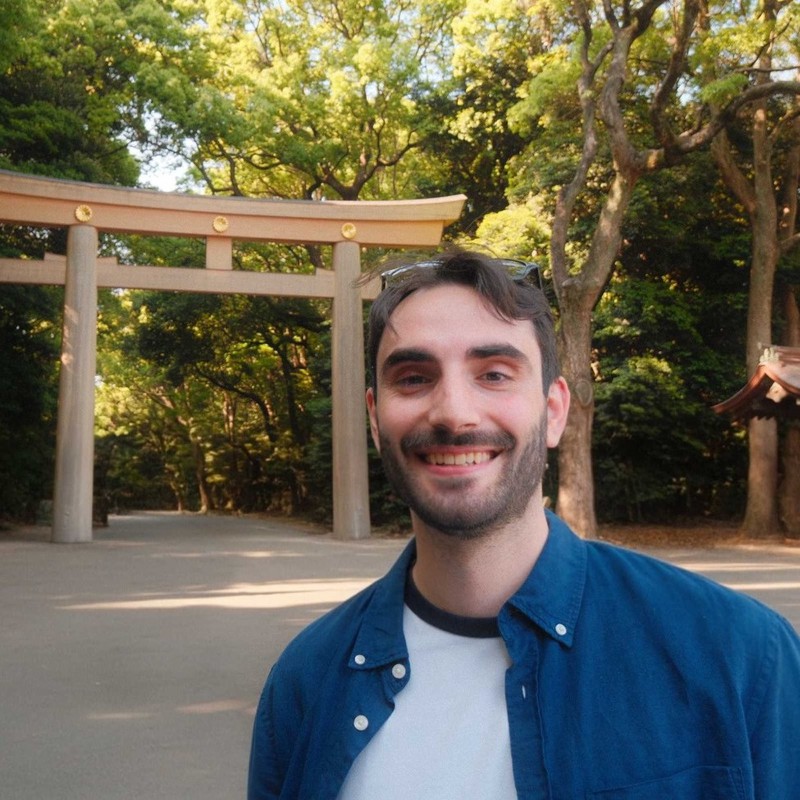
Iason Ofeidis
(he/him)
Ph.D. Candidate, Electrical & Computer Engineering
Professional Summary
I’m a Ph.D. candidate in Electrical and Computer Engineering at Yale, advised by Prof. Leandros Tassiulas. My research sits at the intersection of AI and networked systems, with a focus on Collaborative Learning (Federated, Split) for multimodal models under communication and compute constraints. Before the Ph.D., I interned at Nokia Bell Labs (Networking Research, 2025) and was a Research Engineer at the Yale Institute for Network Science (YINS). Earlier, I was a Research Assistant at the Centre for Research & Technology Hellas (CERTH)/INAB.
I am seeking research internship opportunities for Summer 2027.
Education
Ph.D., Electrical & Computer Engineering
2023 – 2028
Yale University
M.Eng., Electrical & Computer Engineering (Telecommunications)
2015 – 2020
Aristotle University of Thessaloniki
Interests
Experience
Networking Research Intern
Nokia Bell Labs, Murray Hill, NJ
Graduate Researcher
Yale University
Research Engineer
Yale University
Research Assistant
CERTH/INAB
Education
Ph.D., Electrical & Computer Engineering
Yale University
M.Eng., Electrical & Computer Engineering (Telecommunications)
Aristotle University of Thessaloniki
Yale GSAS Student Fellowship
Gerondelis Foundation Award
Also available on Google Scholar.